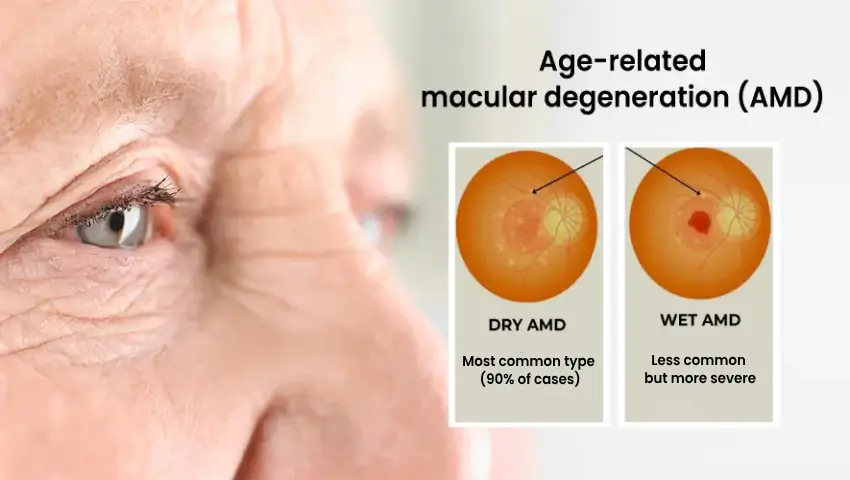
Macular degeneration, also called age-related macular degeneration (AMD), is a common eye condition that affects the macula—the part of the retina responsible for sharp central vision. Although AMD is more common in people over 50, early signs can appear in adults in their 40s.
Can It Be Treated?
- Dry AMD: Currently, there is no cure. However, lifestyle changes (not smoking, eating a diet rich in leafy greens, and maintaining healthy blood pressure) and AREDS2 vitamin supplements may help slow progression.
- Wet AMD: This type can be treated with anti-VEGF injections that slow abnormal blood vessel growth and reduce fluid leakage. Some patients also benefit from laser treatments or photodynamic therapy.
- New therapies: The FDA has recently approved new drugs (such as Syfovre and Izervay) for geographic atrophy, a severe form of dry AMD, which may help slow vision loss.
Possible Complications and Long-Term Effects
- Central vision loss: The most common and significant complication. Patients may struggle to read, drive, or recognize faces.
- Permanent scarring: In wet AMD, abnormal blood vessels can cause scarring that leads to irreversible damage.
- Reduced independence: Loss of central vision can affect quality of life, requiring vision aids or support in daily activities.
- Emotional impact: Vision loss is associated with higher rates of anxiety and depression in some patients.
Key Takeaway
While macular degeneration after age 40 cannot always be cured, modern treatments can slow progression and preserve vision for many years. Early detection through regular eye exams is critical.
References
Disclaimer: This article is for informational purposes only. It summarizes information from trusted health organizations. It is not a substitute for professional medical advice. If you have concerns about your eye health, please consult an ophthalmologist.