Introduction
Myopia, or nearsightedness, is a common refractive error that affects millions of people worldwide. Those with myopia can see nearby objects clearly, but distant objects appear blurry. While glasses and contact lenses have traditionally been used to correct myopia, laser eye surgery has emerged as a popular, long-term solution. This article explores how laser surgery works, its benefits, risks, and who is an ideal candidate.
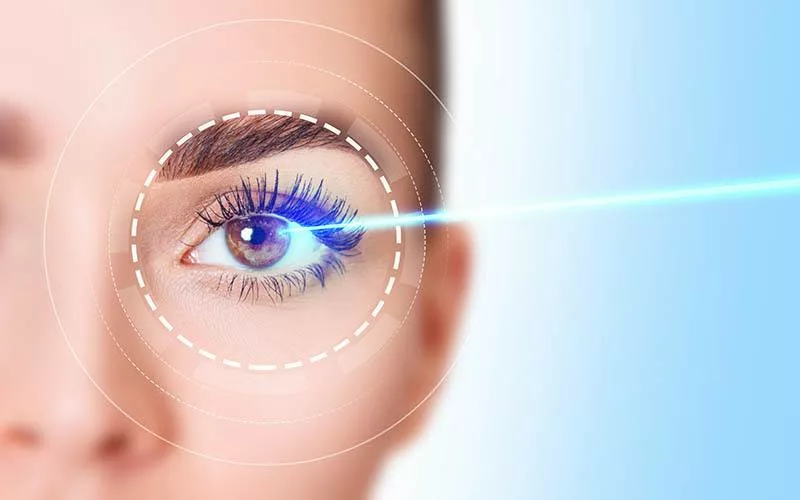
Types of Laser Eye Surgery for Myopia
Several laser-based procedures can correct myopia:
- LASIK (Laser-Assisted In Situ Keratomileusis)
- The most common procedure.
- A thin corneal flap is created, and a laser reshapes the underlying tissue to correct vision.
- Quick recovery (usually 24-48 hours).
- PRK (Photorefractive Keratectomy)
- The outer corneal layer is removed (no flap created).
- Suitable for patients with thin corneas.
- Longer recovery (a few days to weeks).
- SMILE (Small Incision Lenticule Extraction)
- A newer, flapless procedure.
- A small lens-shaped piece of corneal tissue is removed to reshape the eye.
- Less dry eye risk compared to LASIK.
Benefits of Laser Myopia Surgery
- Permanent vision correction – Many patients achieve 20/20 vision or better.
- Quick procedure – Usually takes 10-15 minutes per eye.
- No more dependence on glasses/contacts – Ideal for athletes, travelers, and professionals.
- High success rate – Over 95% of patients report satisfaction.
Potential Risks and Side Effects
While laser surgery is generally safe, possible complications include:
- Dry eyes (temporary or, rarely, long-term).
- Glare or halos at night (usually improves over time).
- Undercorrection/Overcorrection – May require enhancement surgery.
- Infection or inflammation (rare with proper care).
Who Is a Good Candidate?
An ideal candidate for laser myopia surgery:
- Is at least 18 years old (stable vision prescription).
- Has moderate to high myopia (typically up to -8.00 to -10.00 diopters).
- Has healthy corneas (no conditions like keratoconus).
- Is free from eye diseases (e.g., severe dry eye, cataracts).
Conclusion
Laser eye surgery offers a safe and effective way to correct myopia, providing long-term freedom from glasses and contacts. However, a thorough consultation with an ophthalmologist is essential to determine the best procedure based on individual eye health. With advancements in technology, laser vision correction continues to improve, helping people achieve clearer vision and a better quality of life.